
Islamic Light

His life & character

The Prophet Muhammad

وَمَا أَرْسَلْنَاكَ إِلَّا رَحْمَةً لِّلْعَالَمِينَ

Wa mā arsalnāka illā raḥmatan lil-ʿālamīn

A gentle introduction to the final messenger of Allah: his mercy, his integrity, and the light he brought to humanity.

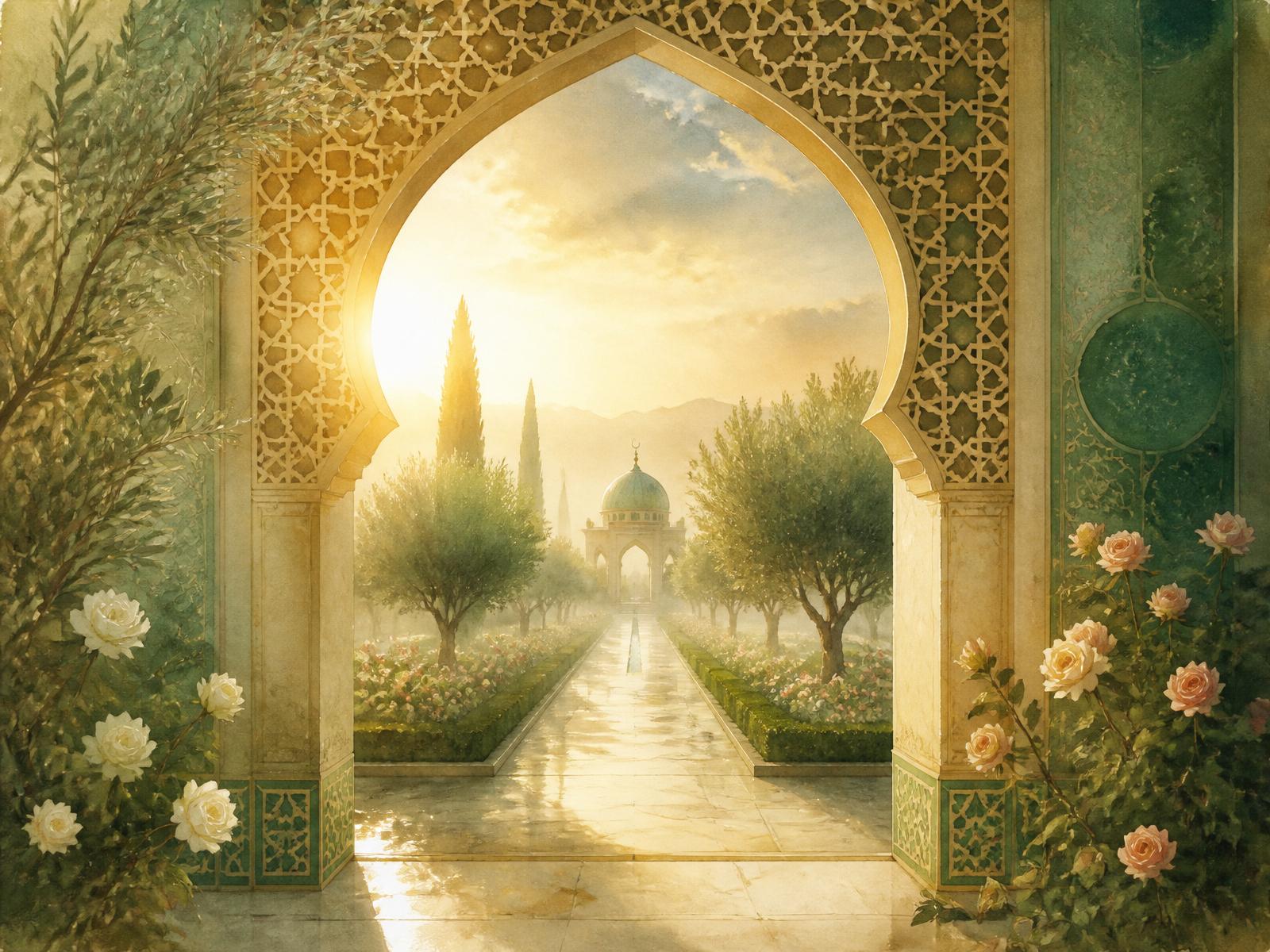
A peaceful Islamic garden with golden light streaming through an ornate archway

وَإِنَّكَ لَعَلَىٰ خُلُقٍ عَظِيمٍ

"And indeed, you are of a great moral character."

Qur'an 68:4

Who he was

The last messenger, the most trustworthy man.

Muhammad ibn ʿAbdillāh was born in Makkah in 570 CE. At age 40, he received the first revelation from Allah through the angel Gabriel. Over the next 23 years, he conveyed the Qur'an, guided his community, and lived a life that embodied every virtue he taught. Muslims believe he is the final prophet in a chain that stretches back to Adam — peace be upon all of them.

His character

Four lights of his personality.

Mercy

Allah sent him as a mercy to all the worlds. He was gentle with children, kind to animals, and patient even with those who opposed him.

"And We have not sent you, [O Muhammad], except as a mercy to the worlds."

Qur'an 21:107

Truthfulness

Before revelation, he was known as Al-Amīn — the Trustworthy. His honesty was so renowned that even his enemies entrusted him with their valuables.

"Indeed, you are of a great moral character."

Qur'an 68:4

Humility

He lived simply, mended his own clothes, sat on the ground, and welcomed the poor and the powerful with the same warmth.

"So by mercy from Allah, you were lenient with them. And if you had been rude and harsh, they would have dispersed from you."

Qur'an 3:159

Justice

He established rights for women, orphans, slaves, and non-Muslims — and held everyone, including himself, accountable before the law.

"O you who have believed, be persistently standing firm for Allah, witnesses in justice."

Qur'an 4:135

A brief life

Moments that shaped a legacy.

570 CE

Born in Makkah

Muhammad was born into the noble clan of Banū Hāshim. His father died before his birth and his mother died when he was six, so he was raised by his grandfather and uncle.

610 CE

First Revelation

At age 40, while meditating in the cave of Hirāʾ, the angel Gabriel appeared to him with the first words of the Qur'an: 'Read, in the name of your Lord.'

622 CE

Migration to Madīnah

After years of persecution, he migrated to Madīnah, where he established a community based on faith, brotherhood, and justice for all its members.

632 CE

Return to Allah

He passed away at age 63 in Madīnah, leaving the Qur'an and his authentic teachings as a lasting guide for humanity.

The Sīrah

His full life story, from birth to return.

An ordered journey through the life of Prophet Muhammad ﷺ — his lineage, birth, calling, mission, migration, battles, the opening of Makkah, his farewell pilgrimage, and his passing.

1

Before his birth

Lineage and world

He is Muhammad, son of ʿAbdullāh, son of ʿAbd al-Muṭṭalib, of the clan of Hāshim in Quraysh — descended from Ishmael, son of Abraham, peace be upon them. Quraysh were the custodians of the Kaʿbah in Makkah, known for trade, generosity, and eloquence.

Arabia before his calling lived a spiritual and moral darkness: idols set around the Kaʿbah, infant girls buried alive, endless tribal vengeance — with only traces of Abraham's pure monotheism left among a few.

2

570 CE

Birth, orphanhood, and care

He was born in Makkah in the Year of the Elephant, after his father ʿAbdullāh had already died. He was nursed by Ḥalīmah of Banū Saʿd, then returned to his mother Āminah, who died when he was six.

His grandfather ʿAbd al-Muṭṭalib cared for him for two years, then his uncle Abū Ṭālib. He shepherded flocks as a boy and travelled with his uncle on trade journeys to Syria, growing up honest, trustworthy, and untouched by his people's idolatry.

3

595 CE

Marriage to Khadījah

Trading faithfully with the wealth of Khadījah bint Khuwaylid, his honesty won her respect; he married her at twenty-five, and she became his closest support and the first to believe in him.

Before revelation he was called Al-Amīn, the Trustworthy. When Quraysh rebuilt the Kaʿbah and quarrelled over placing the Black Stone, he had it carried in a cloth held by every tribe — preventing bloodshed.

4

610 CE

The calling and first revelation

He would withdraw to the cave of Hirāʾ to worship and reflect. At forty, the angel Gabriel came to him with the command 'Read!' — the opening verses of Sūrah al-ʿAlaq: 'Read, in the name of your Lord who created.'

He returned trembling; Khadījah reassured him and Waraqah ibn Nawfal confirmed his prophethood. Revelation then continued for twenty-three years, bringing the Qur'an, law, and reassurance.

5

610–613 CE

The quiet call

He began with those closest to him: Khadījah, Abū Bakr, ʿAlī, Zayd ibn Ḥārithah, ʿUthmān, Saʿd, and other early believers. The house of Al-Arqam became their first school.

The heart of his message was the oneness of God, resurrection and accountability, purification of the soul, and dignity for the poor and the weak — truths Makkah's elite could not bear.

6

613–622 CE

Open preaching and persecution

When commanded to 'proclaim what you are ordered', he announced the message publicly at Ṣafā. Quraysh answered with mockery, then torture: Bilāl, Yāsir, and Sumayyah among those who suffered. He and his kin were boycotted in the valley of Abū Ṭālib for three years.

He permitted a group to migrate to the just king of Abyssinia. In the 'Year of Grief' both Khadījah and Abū Ṭālib died. Then came the Night Journey and Ascension, in which the five daily prayers were ordained, and finally the pledges of the people of Madīnah at ʿAqabah.

7

622 CE

Migration to Madīnah

He left with Abū Bakr, sheltering three nights in the cave of Thawr, and reached Madīnah, where he built the mosque of Qubāʾ and then the Prophet's Mosque — giving the believers a home and safety.

He bonded the migrants and the people of Madīnah as brothers, sharing wealth and homes, and wrote a charter regulating life with the Jewish tribes and all residents on justice, freedom of religion, and shared defence.

8

624–628 CE

The battles and a settled community

At Badr (2 AH) a small force was granted victory; at Uḥud (3 AH) came hard lessons in obedience and steadfastness; at the Trench (5 AH) the believers endured a siege until the alliance withdrew.

The treaty of Ḥudaybiyah (6 AH) was a victory through peace that opened the way for Islam to spread. He sent letters to kings inviting them to God, and Khaybar and Muʾtah marked this period.

9

630 CE

The opening of Makkah

When the treaty was broken he entered Makkah with ten thousand, almost without fighting, head lowered in humility before God, telling those who had harmed him: 'Go, you are free.'

The idols around the Kaʿbah were removed and the people of Makkah embraced Islam. Ḥunayn, Ṭāʾif, and Tabūk followed, and delegations came from every direction.

10

632 CE

Farewell pilgrimage and passing

He performed the Farewell Pilgrimage with over a hundred thousand people and delivered a sermon establishing the sanctity of life, property, and honour, the rights of women, and the end of superiority by lineage or colour: 'I leave with you what, if you hold to it, you will never go astray: the Book of God.'

He then fell ill and passed away in Madīnah in Rabīʿ al-Awwal of the eleventh year after the migration, aged sixty-three, buried in the chamber of ʿĀʾishah — leaving the Qur'an and his Sunnah as light for humanity.

In his words

Aḥādīth — his authentic sayings.

A selection of authentic narrations, each with a short note on its meaning and how to live it.

Sincerity

إنما الأعمال بالنيات، وإنما لكل امرئ ما نوى

"Actions are judged by intentions, and each person will have what he intended."

A deed's worth lies in its purpose; a small act done sincerely outweighs a great one done for show.

Ṣaḥīḥ al-Bukhārī 1 — Muslim

Mercy

الرَّاحمون يرحمهم الرحمن، ارحموا مَن في الأرض يرحمكم مَن في السماء

"The merciful are shown mercy by the Most Merciful. Be merciful to those on earth, and the One above will be merciful to you."

Mercy to family, neighbours, strangers, and even animals is the path to God's mercy.

Sunan Abī Dāwūd 1941 — Tirmidhī

Character

إن مِن أحبِّكم إليَّ وأقربكم منّي مجلسًا يوم القيامة أحسنكم أخلاقًا

"The most beloved of you to me, and the closest to me on the Day of Judgement, are those best in character."

Good character is not decoration; it is the fruit of faith and the nearest route to the Prophet's love.

Sunan al-Tirmidhī 2018

Love for others

لا يؤمن أحدكم حتى يحبَّ لأخيه ما يحب لنفسه

"None of you truly believes until he loves for his brother what he loves for himself."

A practical measure of faith: rejoice for others as you would for yourself.

Ṣaḥīḥ al-Bukhārī 13 — Muslim

Harming none

المسلم مَن سلِم المسلمون من لسانه ويده

"The Muslim is one from whose tongue and hand people are safe."

Islam begins with keeping others safe from your words and actions, before outward rituals.

Ṣaḥīḥ al-Bukhārī 10

Speech

مَن كان يؤمن بالله واليوم الآخر فليقل خيرًا أو ليصمت

"Whoever believes in God and the Last Day, let him speak good or remain silent."

The tongue is a trust; where there is no good to say, silence guards the heart and relationships.

Ṣaḥīḥ al-Bukhārī 6475 — Muslim

The five pillars

بُني الإسلام على خمس: شهادة أن لا إله إلا الله وأن محمدًا رسول الله، وإقام الصلاة، وإيتاء الزكاة، وصوم رمضان، وحج البيت

"Islam is built on five: the testimony of faith, prayer, charity, fasting Ramadan, and pilgrimage."

The five pillars are a practical frame for one's relationship with God and with people.

Ṣaḥīḥ al-Bukhārī 8 — Muslim 16

Knowledge

مَن سلك طريقًا يطلب فيه علمًا سهّل الله له طريقًا إلى الجنة

"Whoever takes a path seeking knowledge, God makes easy for him a path to Paradise."

Seeking beneficial knowledge is worship — every step of reading or learning the Qur'an draws you nearer.

Ṣaḥīḥ Muslim 2699

Common questions

What people often ask.

Was he the founder of Islam?

No. Muslims believe Muhammad was the final messenger in a long line of prophets — including Adam, Noah, Abraham, Moses, and Jesus — who all taught submission to the One God.

Why do Muslims say 'peace be upon him' after his name?

It is a prayer of respect and love. The Arabic phrase ṣallā Allāhu ʿalayhi wa sallam (ﷺ) means 'May Allah send blessings and peace upon him.'

Did he perform miracles?

Yes, by the permission of Allah. The greatest miracle is the Qur'an — a book of guidance, language, and prophecy that remains unchanged since it was revealed.

What do Muslims believe about his role?

He is believed to be the last prophet and messenger. His role was to convey the final revelation, complete the message of monotheism, and model an upright life.

What to learn

Main lessons from the life of Muḥammad ﷺ ﷺ

Test yourself

A short quiz — Muḥammad ﷺ ﷺ

Ten questions. Answer them, see your grade, and share it with someone you care about.

Question 1 of 10

Score: 0

What was Muhammad ﷺ known as before revelation began?

Next step

Learn the words he taught us to pray.

The Prophet Muhammad ﷺ taught the five daily prayers with patience and love. Begin with wuḍūʾ and one simple rakʿah.

Learn how to pray