
Worship
The prayer — Salāh.
حَيَّ عَلَى ٱلصَّلَاة
Ḥayya ʿalā ṣ-ṣalāh — come to the prayer
Five times a day, at dawn, at midday, in the afternoon, at sunset, and at night, a Muslim turns toward Makkah and speaks with the Creator directly. Learn it slowly. Every movement is a mercy.
The five daily prayers
A rhythm from dawn to night.
ٱلْفَجْر
Fajr
Before dawn
2 rakʿah
The dawn prayer — quiet, cool, the sky still dark blue.
ٱلظُّهْر
Ẓuhr
After midday
4 rakʿah
A pause at the peak of the day, when the sun begins its descent.
ٱلْعَصْر
ʿAṣr
Afternoon
4 rakʿah
The 'middle prayer' — a return to Allah before the day fades.
ٱلْمَغْرِب
Maghrib
Just after sunset
3 rakʿah
The most tender prayer — the sky in orange and rose.
ٱلْعِشَاء
ʿIshāʾ
Night
4 rakʿah
The final prayer, closing the day in the arms of the night.
Before you begin
Foundations of prayer.
A few questions often asked by those learning Salāh. Open each one to understand the meaning, the obligation, and the preparation that comes before the prayer itself.
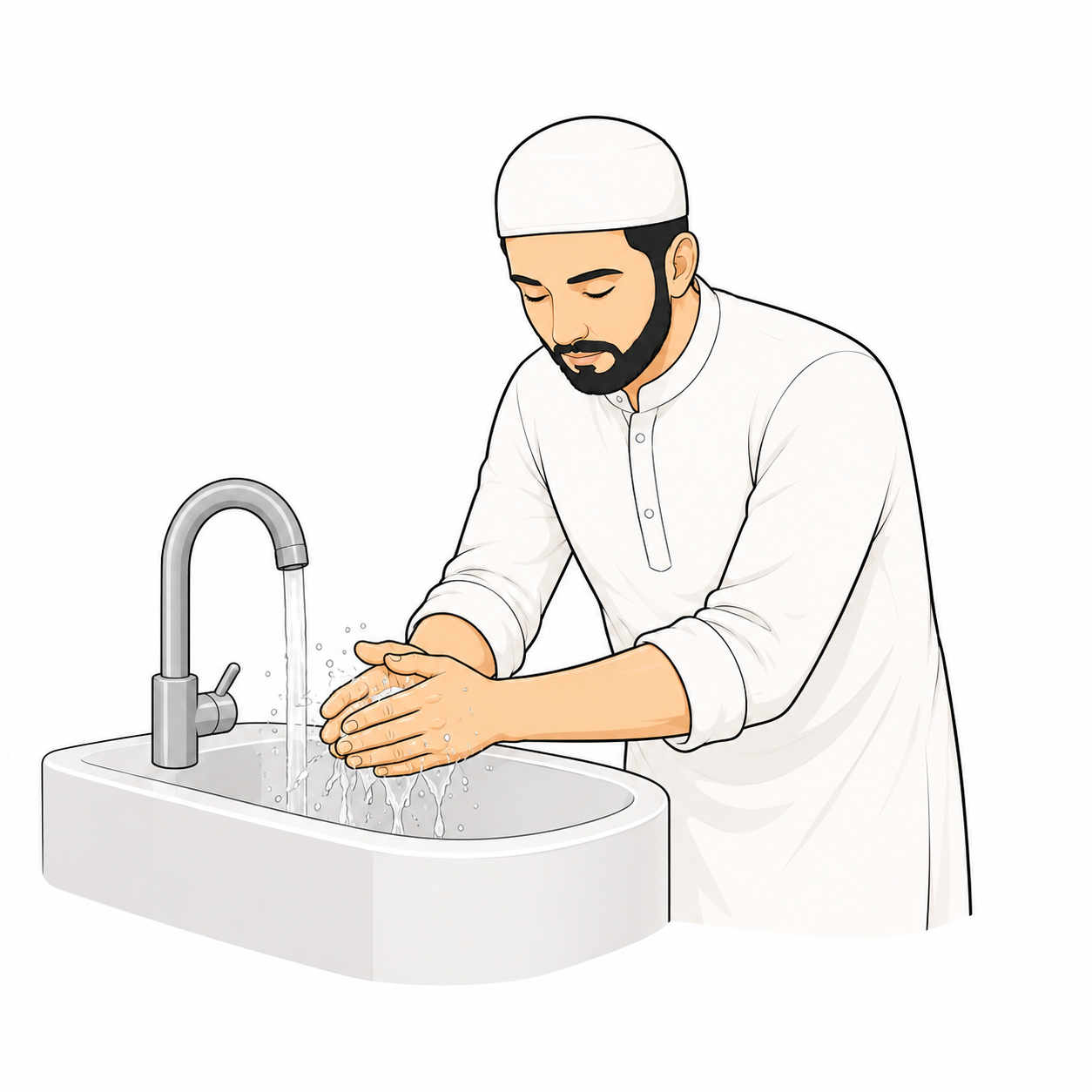
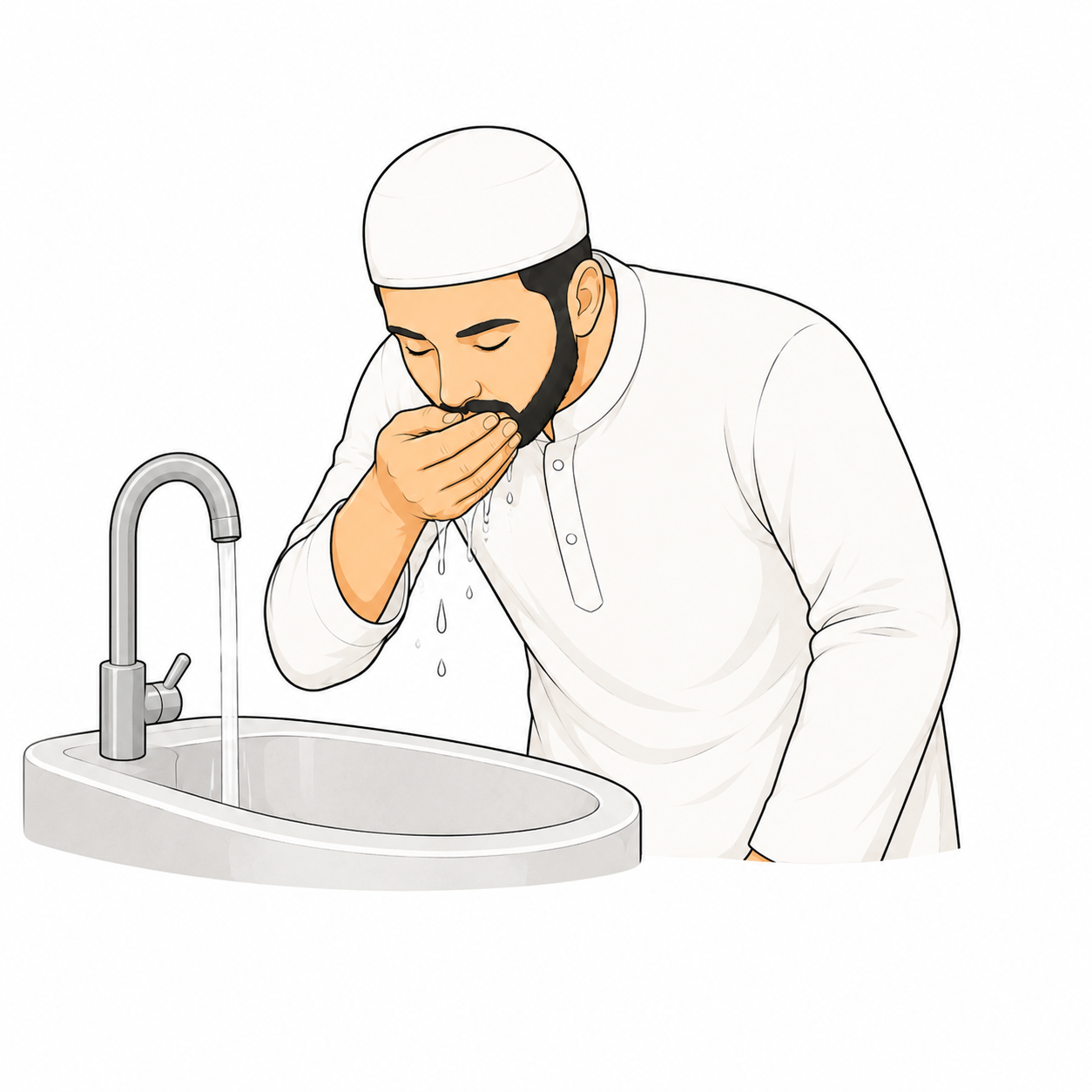
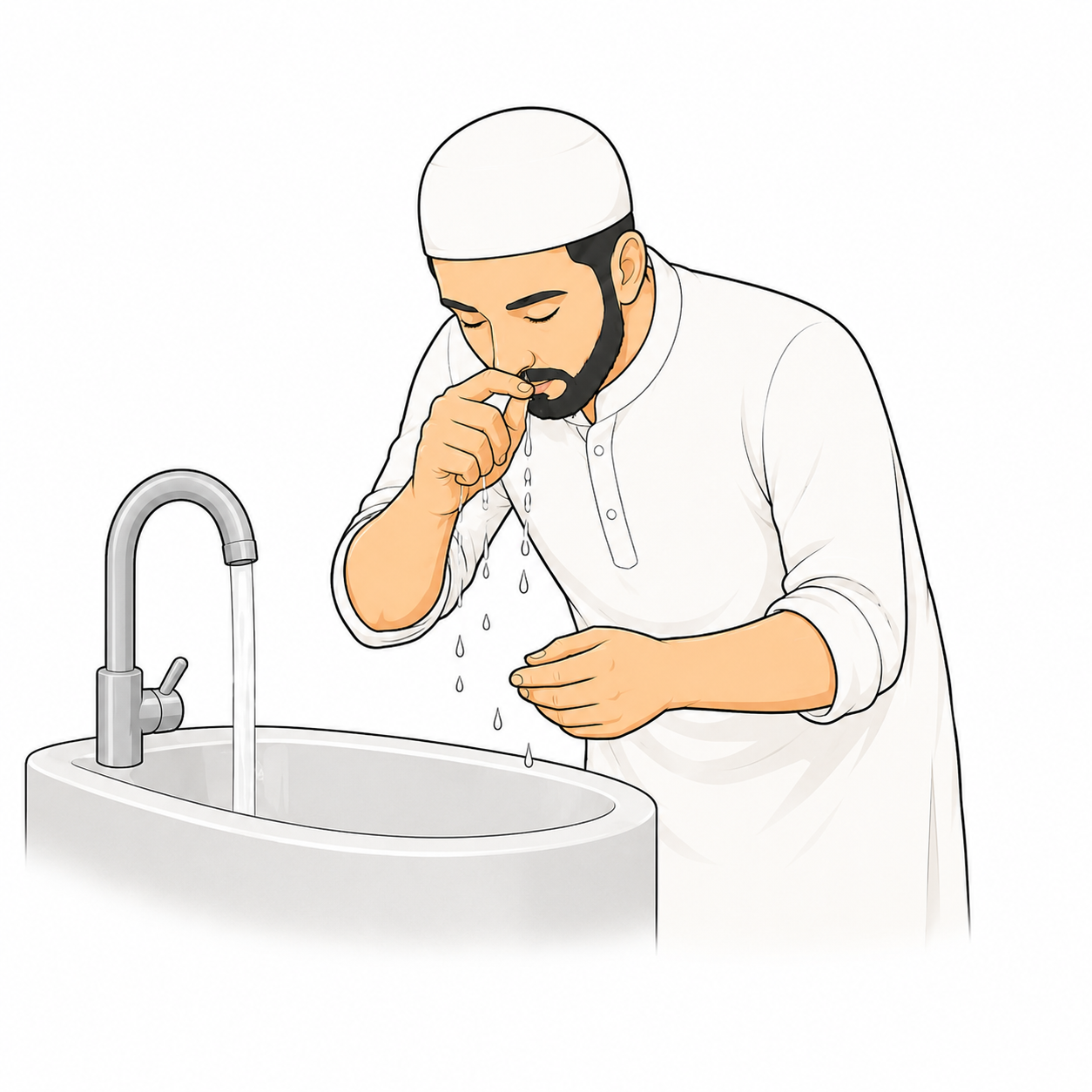
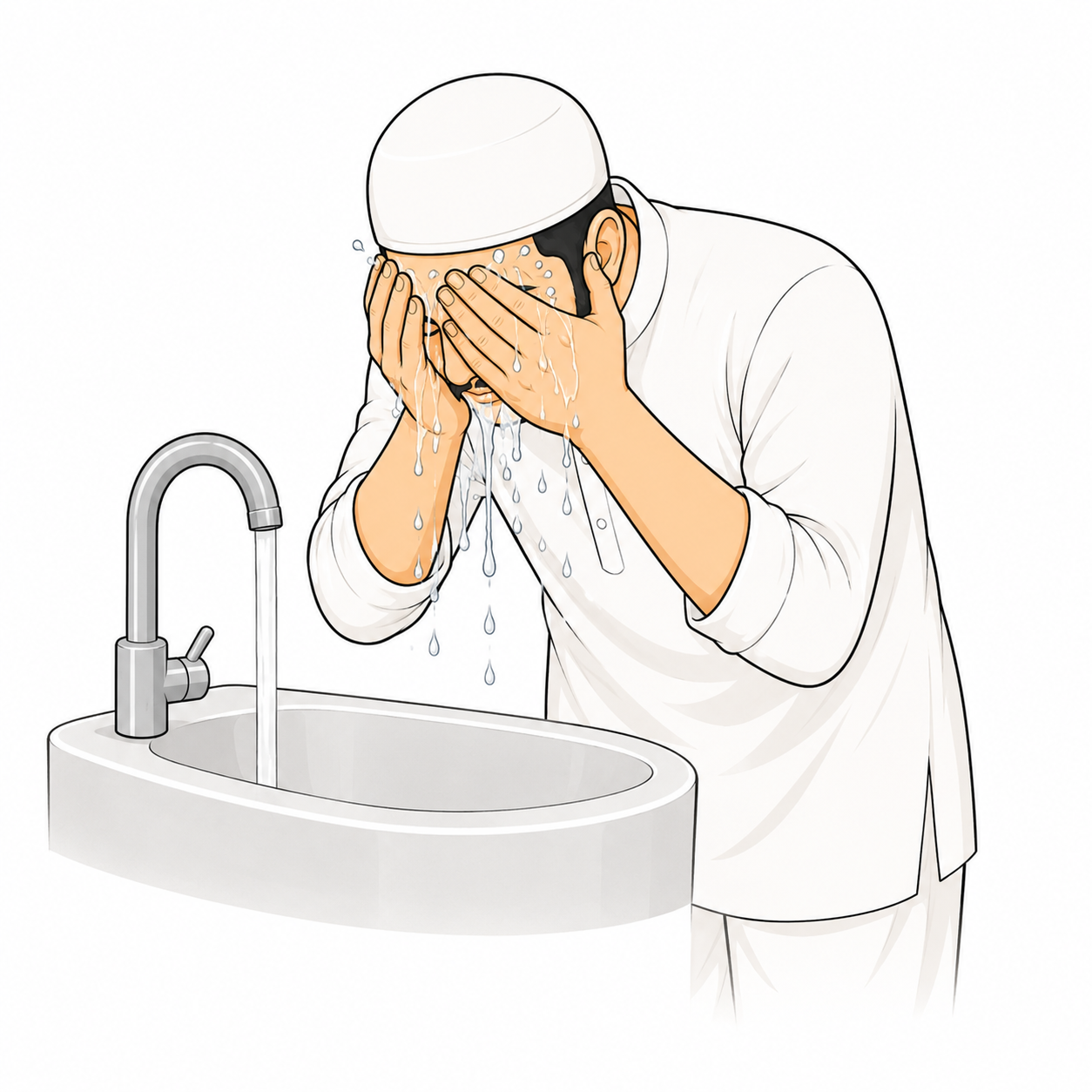
Step 1 — Wudu
The small ablution.
Before every prayer, a brief washing — not just of the body, but of the day. The Prophet ﷺ said: with each drop, small mistakes fall away.
- 1
Say Bismillāh
Begin with 'In the name of Allah' and make intention in your heart.
- 2
Wash your hands
Three times, up to the wrists.
- 3
Rinse your mouth
Three times — a light rinse, swishing water gently.
- 4
Clean your nose
Three times — gently sniff a little water and blow it out.
- 5
Wash your face
Three times, from hairline to chin and ear to ear.
- 6
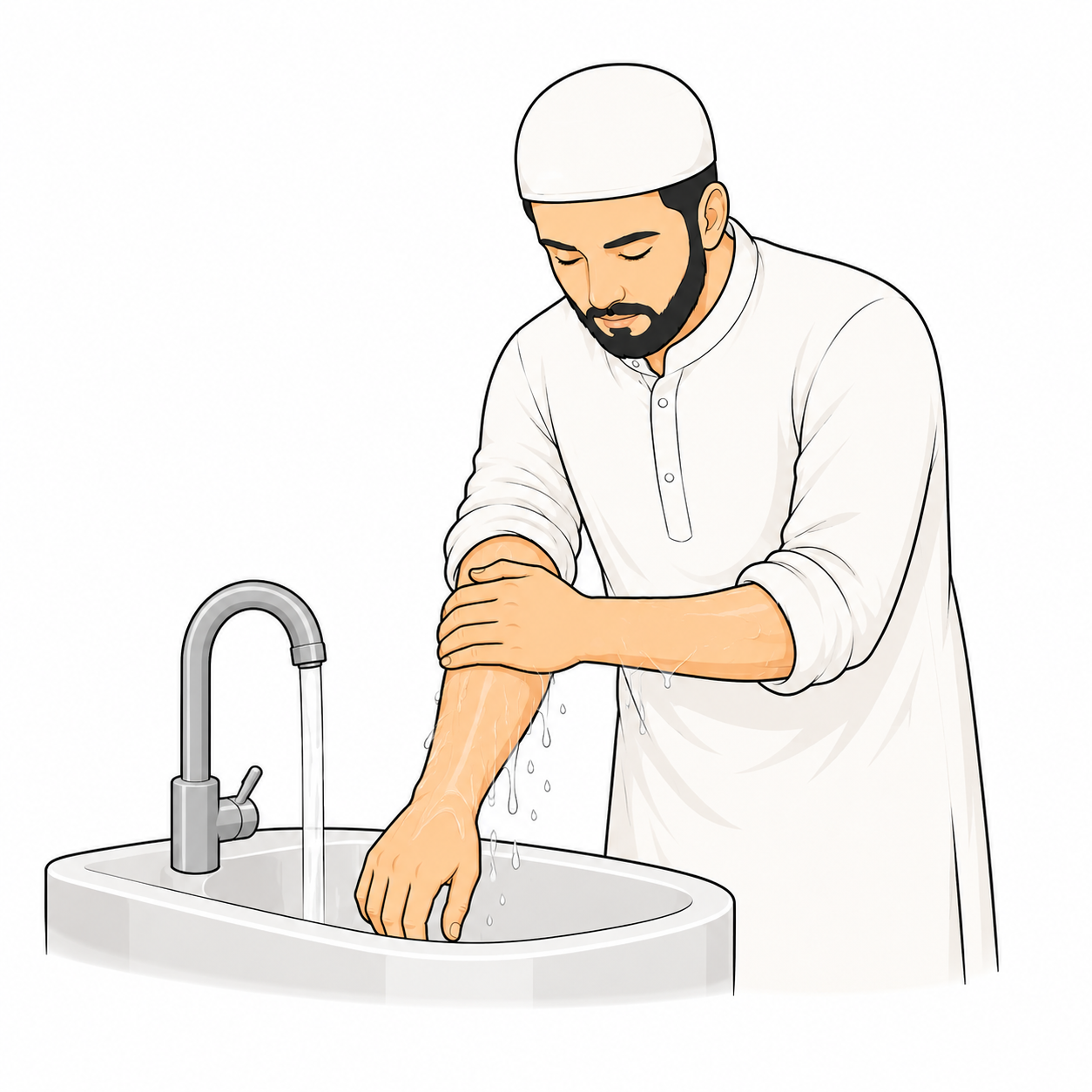
Wash your arms
Three times each, from the fingertips up to the elbows, right then left.
- 7
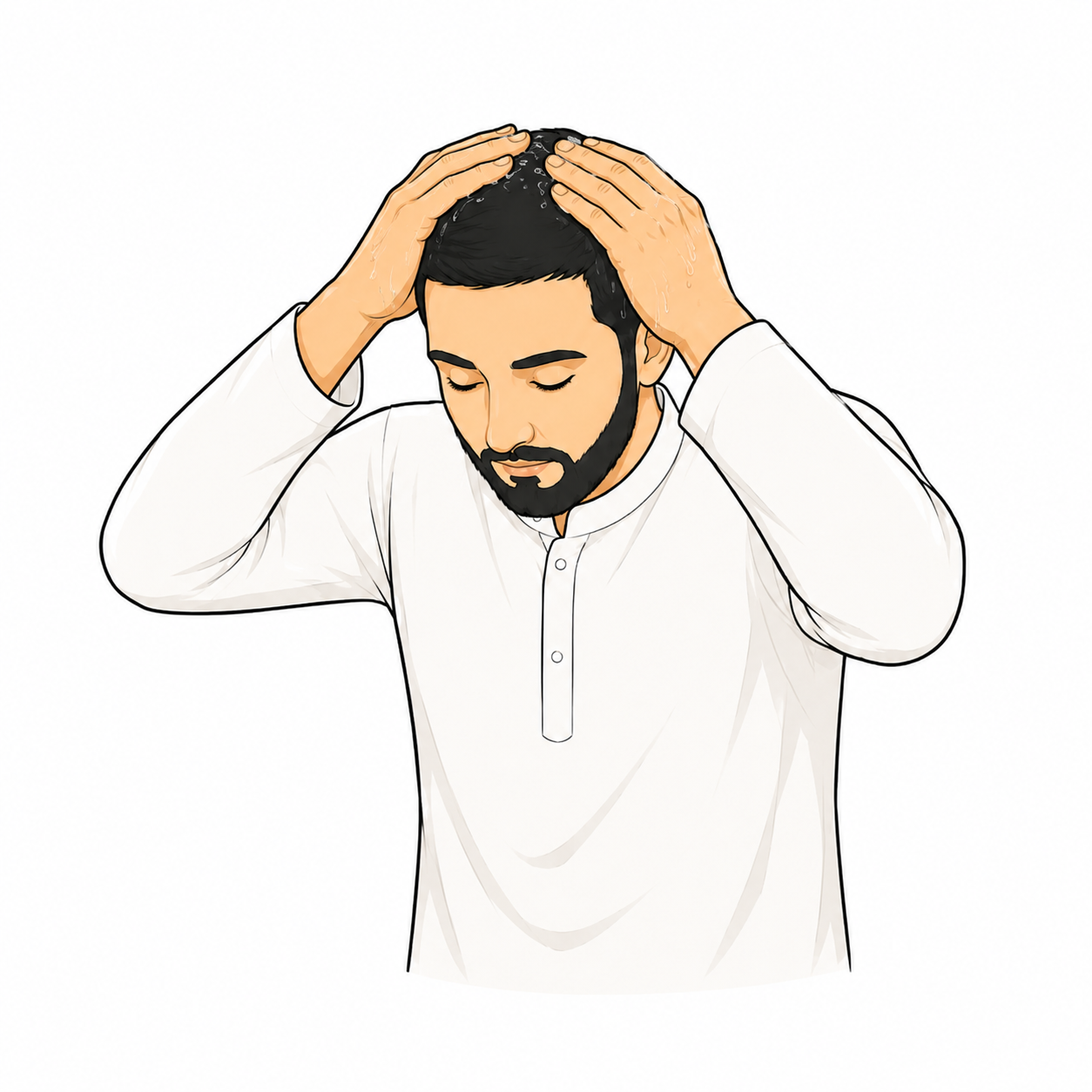
Wipe your head
Once, with wet hands from front to back.
- 8
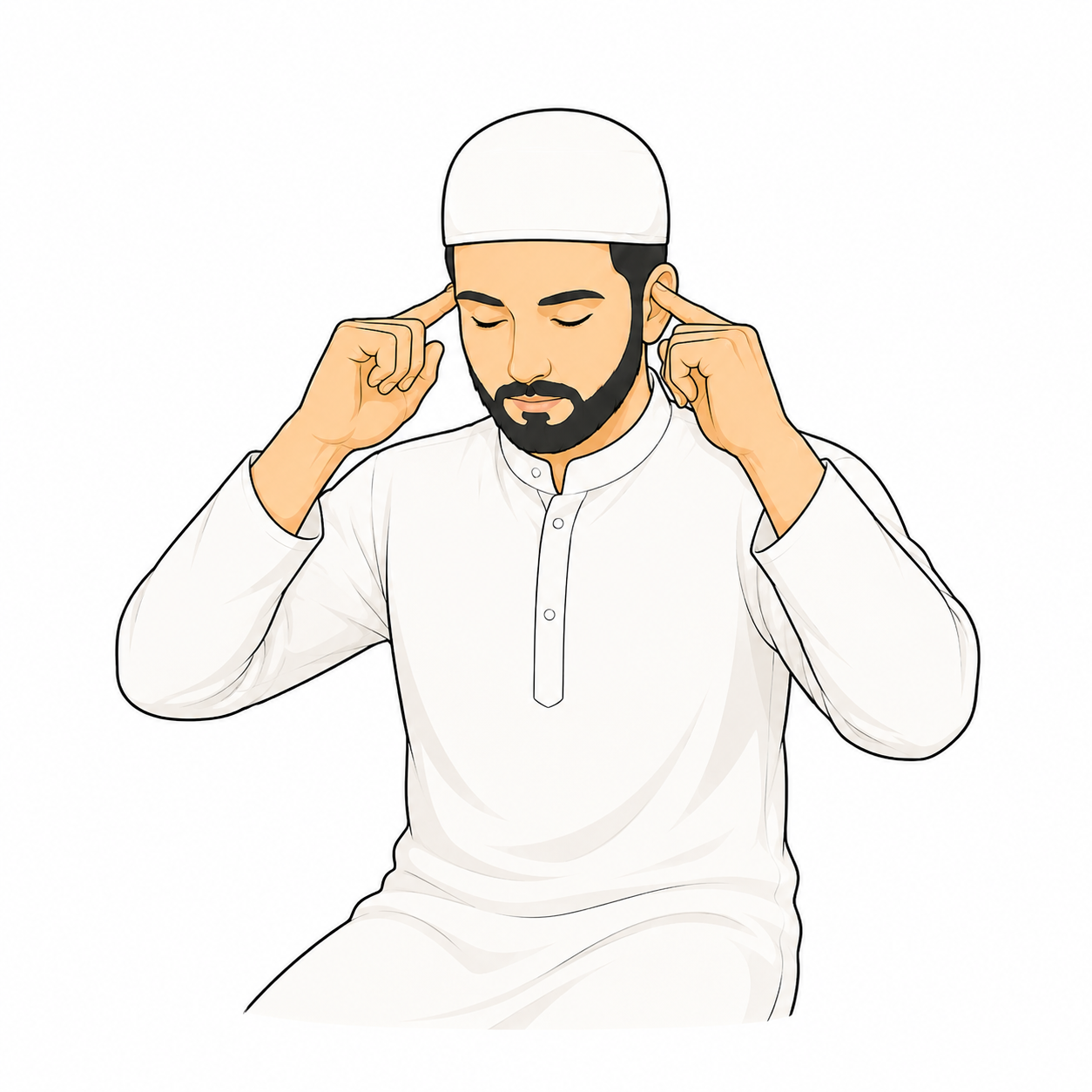
Wipe your ears
Once, gently with wet fingers — inside and behind.
- 9
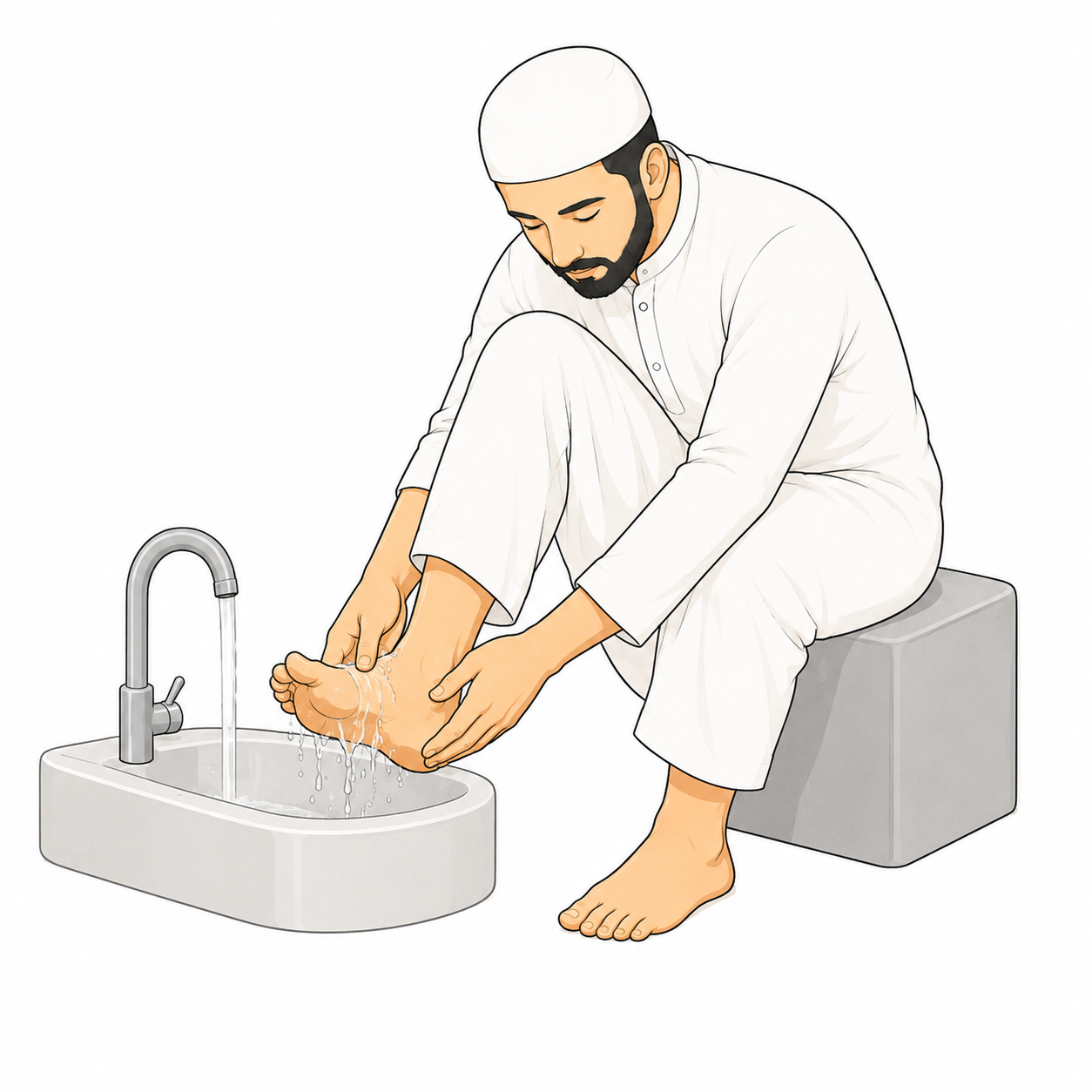
Wash your feet
Three times each, up to the ankles, right then left.
- 10
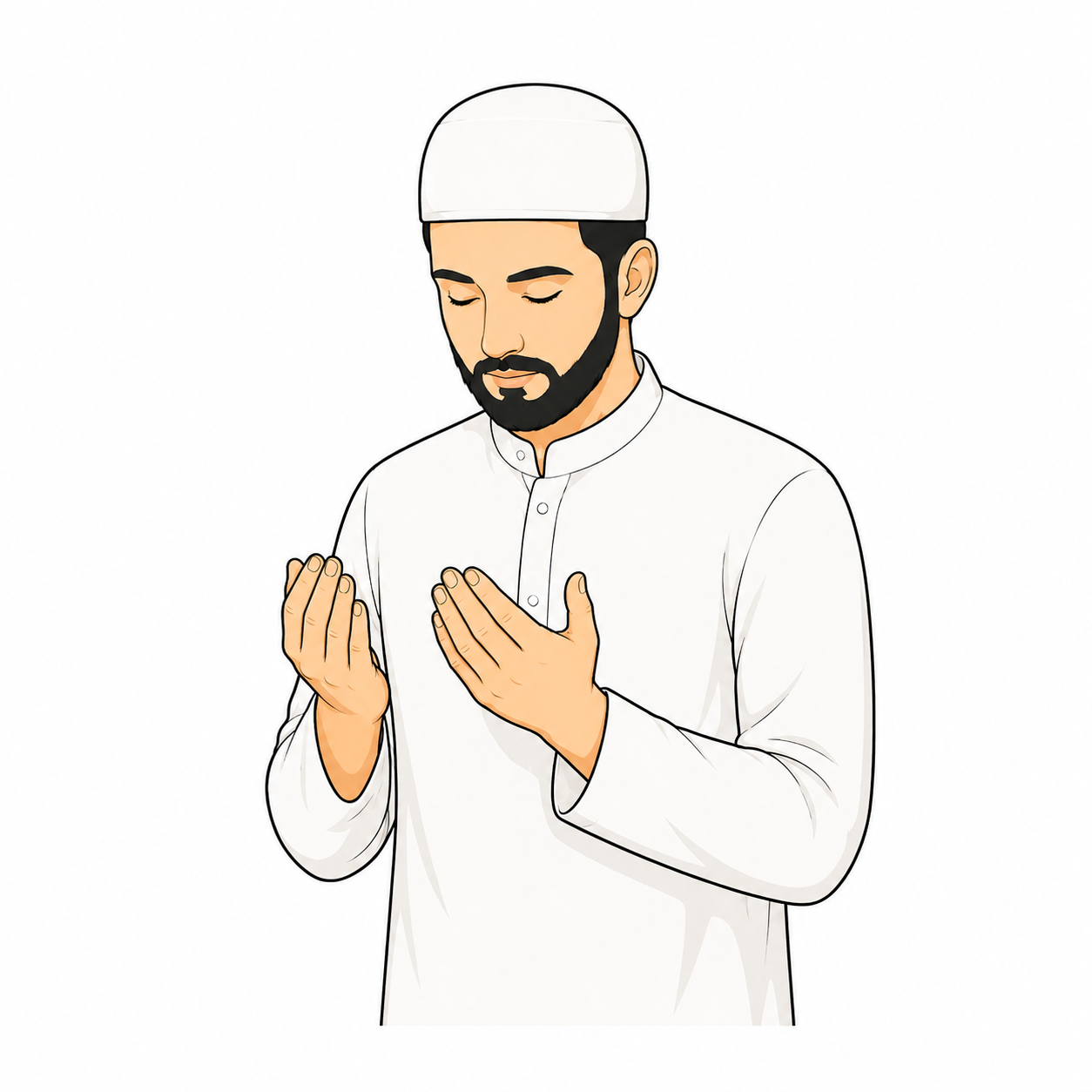
Closing duʿāʾ
Raise your hands and say: Ashhadu an lā ilāha illa Allāh, waḥdahu lā sharīka lah, wa ashhadu anna Muḥammadan ʿabduhu wa rasūluh.
Step 2 — One rakʿah
The shape of the prayer.
A single unit — a rakʿah — moves through standing, bowing, and prostrating. Every prayer is two, three, or four rakʿahs repeated.
01
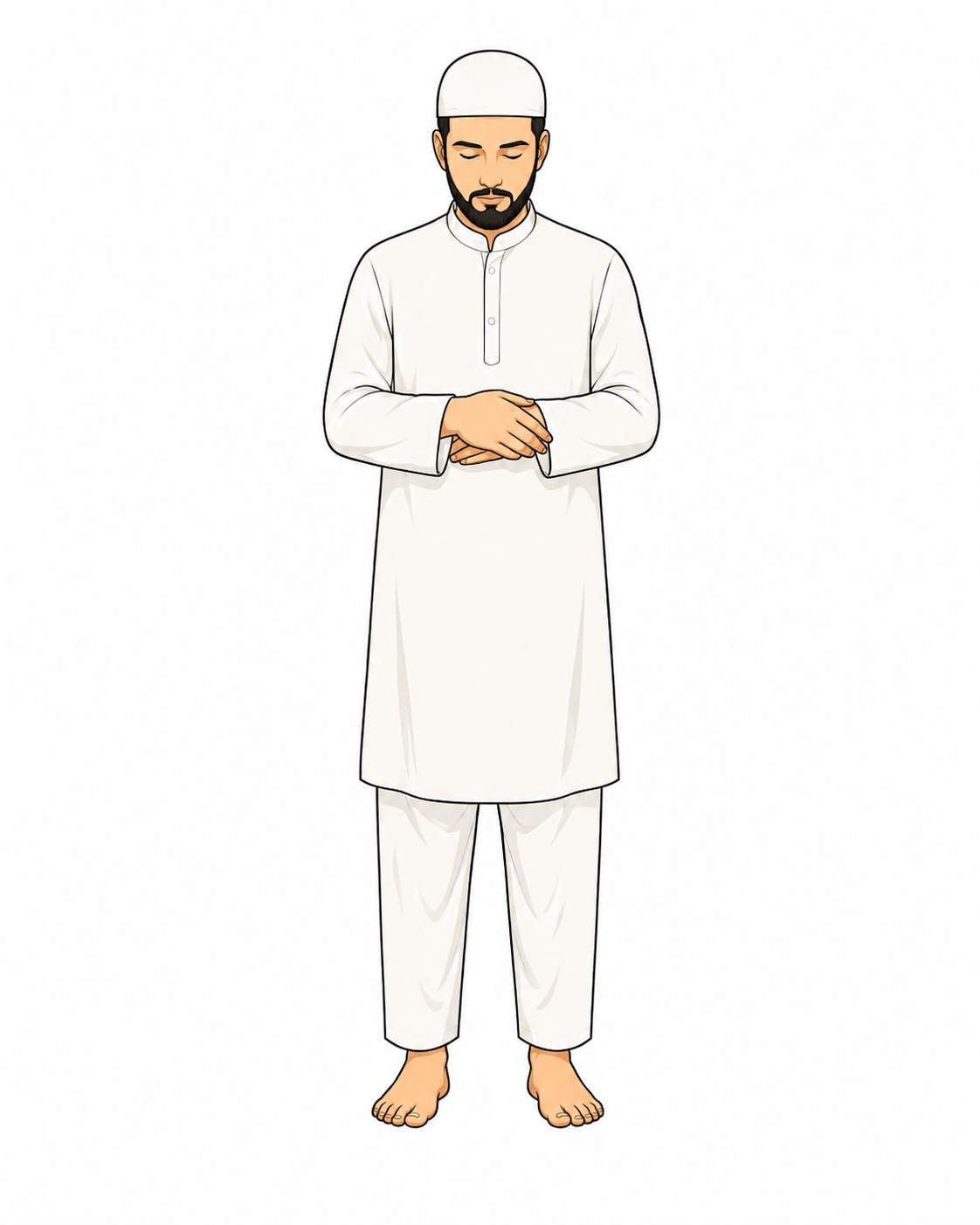
Standing — Qiyām
قِيَام
Face the Qiblah (toward Makkah). Raise your hands to your ears and say "Allāhu akbar". Place your right hand over your left on your chest.
Said in this position: Recite Surah Al-Fātihah, then one short surah of your choice.
02
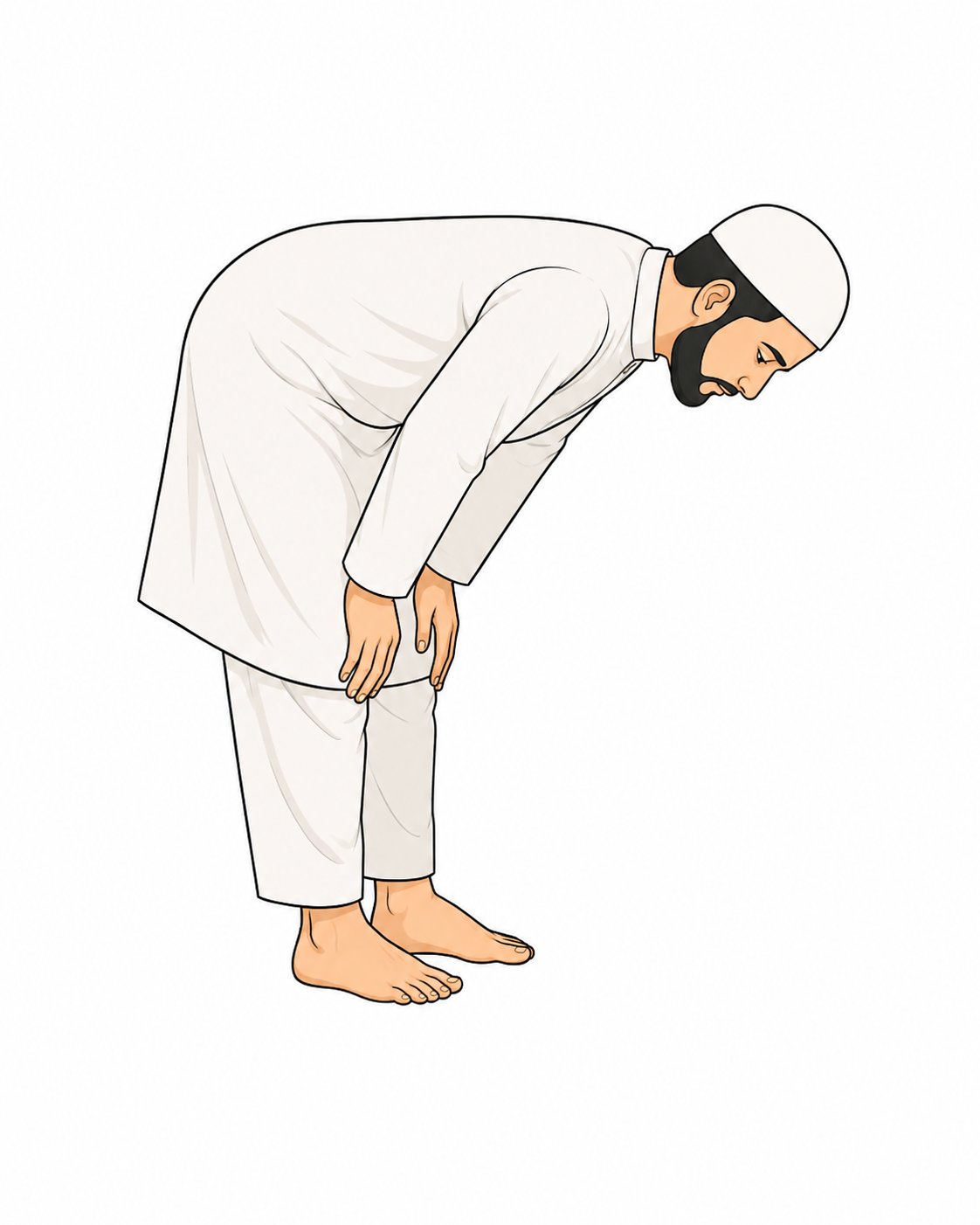
Bowing — Rukūʿ
رُكُوع
Say "Allāhu akbar" and bow with a straight back, hands on knees.
Said in this position: Say three times: Subḥāna Rabbī al-ʿAẓīm — 'Glory to my Lord, the Most Great.'
03
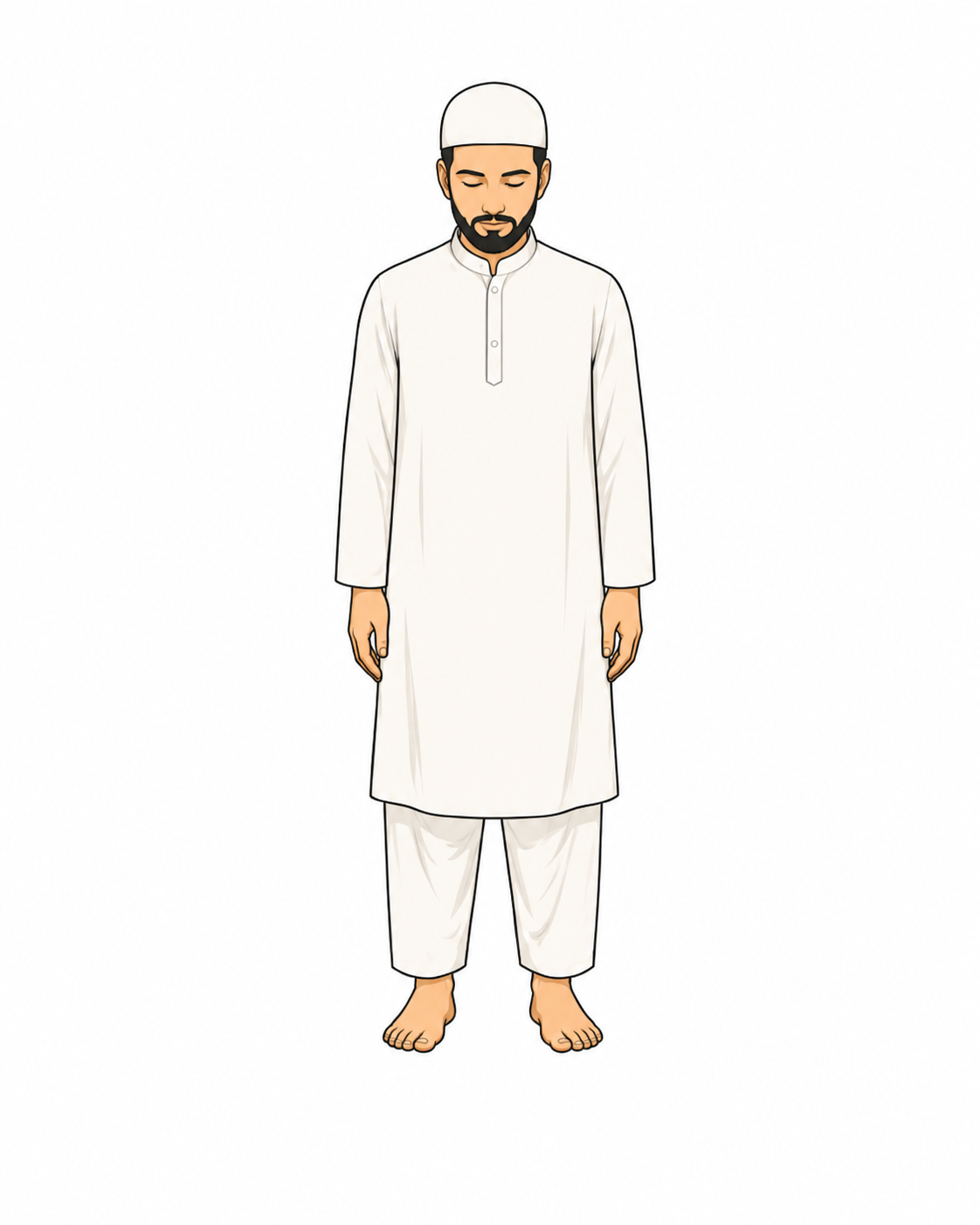
Rising — Iʿtidāl
ٱعْتِدَال
Rise back to standing, hands at your sides.
Said in this position: Say: Samiʿa Allāhu liman ḥamidah Rabbanā wa laka al-ḥamd wa Al-Shokr— 'Allah hears the one who praises Him, Our Lord, and to You belongs the praise.
04
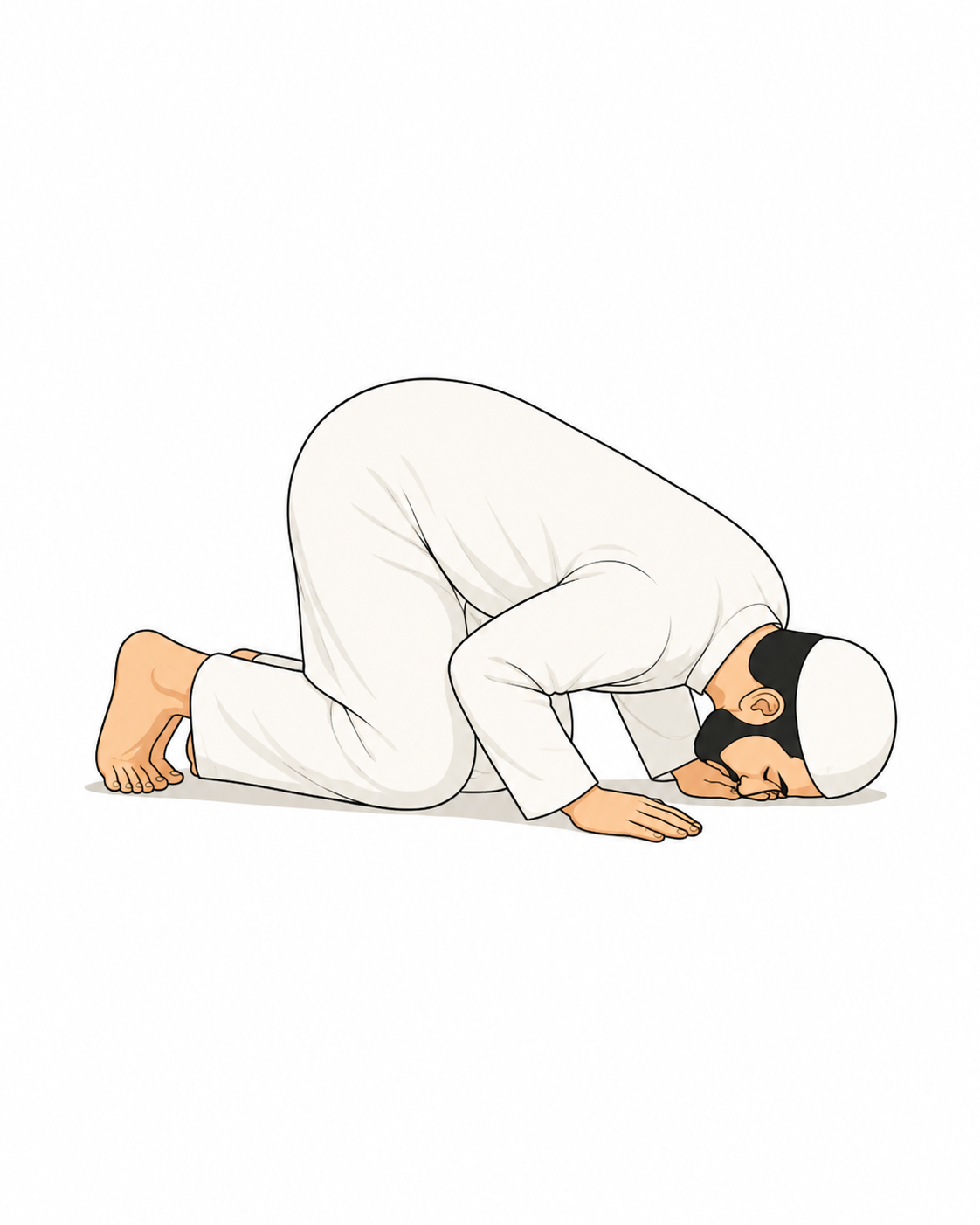
Prostration — Sujūd
سُجُود
Say "Allāhu akbar" and go down: knees, hands, then forehead and nose to the ground. Seven points touch the floor.
Said in this position: Say three times: Subḥāna Rabbī al-Aʿlā — 'Glory to my Lord, the Most High.' This is the closest a servant is to Allah.
05
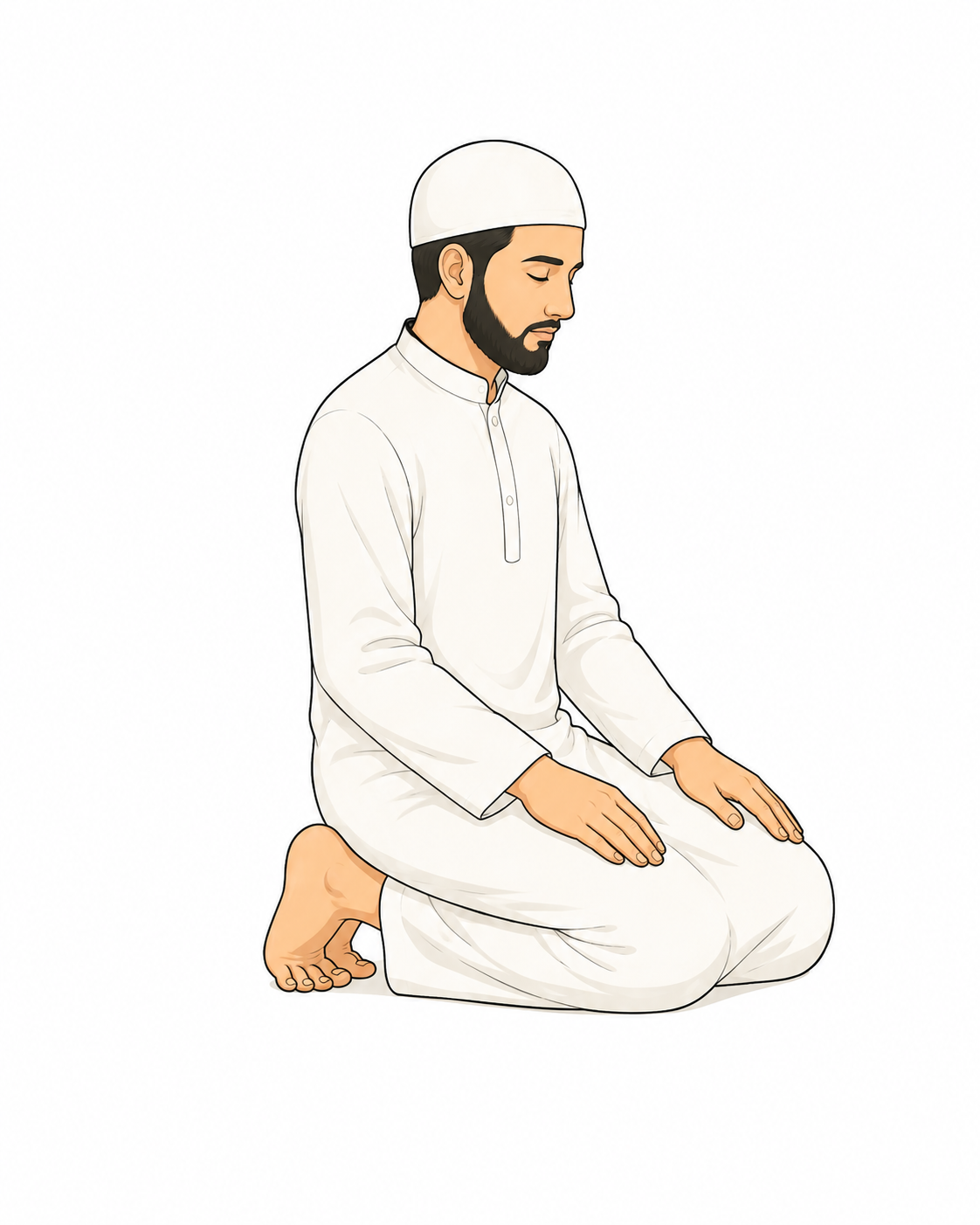
Sitting between — Jalsah
جَلْسَة
While coming up to the sitting position say "Allāhu akbar", sit briefly on your left foot with the right foot upright.
Said in this position: Say: Rabbi ighfir lī — 'My Lord, forgive me.'
06
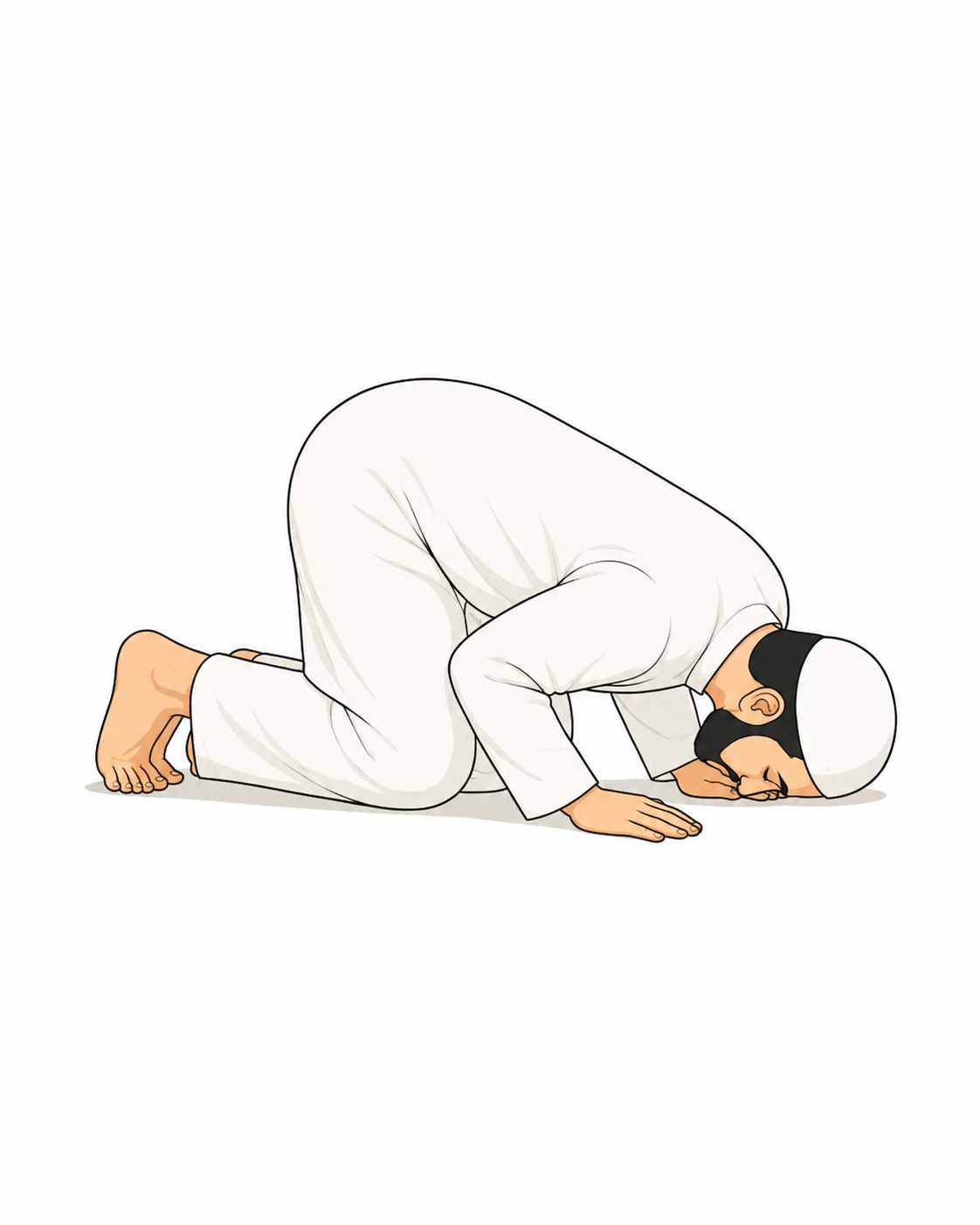
Second prostration
سُجُود
Say "Allāhu akbar" and go down: knees, hands, then forehead and nose to the ground. Seven points touch the floor.
Said in this position: Same as the first, Say three times: Subḥāna Rabbī al-Aʿlā.
Step 3 — The second rakʿah
Completing the prayer.
The second rakʿah mirrors the first, then rests in the sitting of Tashahhud — a moment of witness — and closes with Taslīm, turning right and left in peace. In a two-rakʿah prayer such as Fajr, this is the end.
01
Rise for the second rakʿah — Qiyām
قِيَام
After the second prostration of the first rakʿah, say "Allāhu akbar" and rise back to standing. Place your right hand over your left on the chest.
Said in this position: Recite Surah Al-Fātihah again, followed by another short surah. There is no opening supplication this time — only Bismillāh, then Al-Fātihah.
02
Bowing — Rukūʿ
رُكُوع
Say "Allāhu akbar" and bow with a straight back, hands resting on the knees.
Said in this position: Say three times: Subḥāna Rabbī al-ʿAẓīm.
03
Rising — Iʿtidāl
ٱعْتِدَال
Rise back to standing, arms at your sides, at complete stillness.
Said in this position: Say: Samiʿa Allāhu liman ḥamidah Rabbanā wa laka al-ḥamd wa Al-Shokr— 'Allah hears the one who praises Him, Our Lord, and to You belongs the praise.
04
First prostration — Sujūd
سُجُود
Say "Allāhu akbar" and go down to prostration: knees, hands, then forehead and nose — seven points touching the ground.
Said in this position: Say three times: Subḥāna Rabbī al-Aʿlā.
05
Sitting between — Jalsah
جَلْسَة
While coming up to the sitting position say "Allāhu akbar", sit briefly and calmly between the two prostrations.
Said in this position: Rabbi ighfir lī — 'My Lord, forgive me.'
06
Second prostration — Sujūd
سُجُود
Say "Allāhu akbar" and prostrate again, exactly as before, unhurried.
Said in this position: Subḥāna Rabbī al-Aʿlā — three times.
07
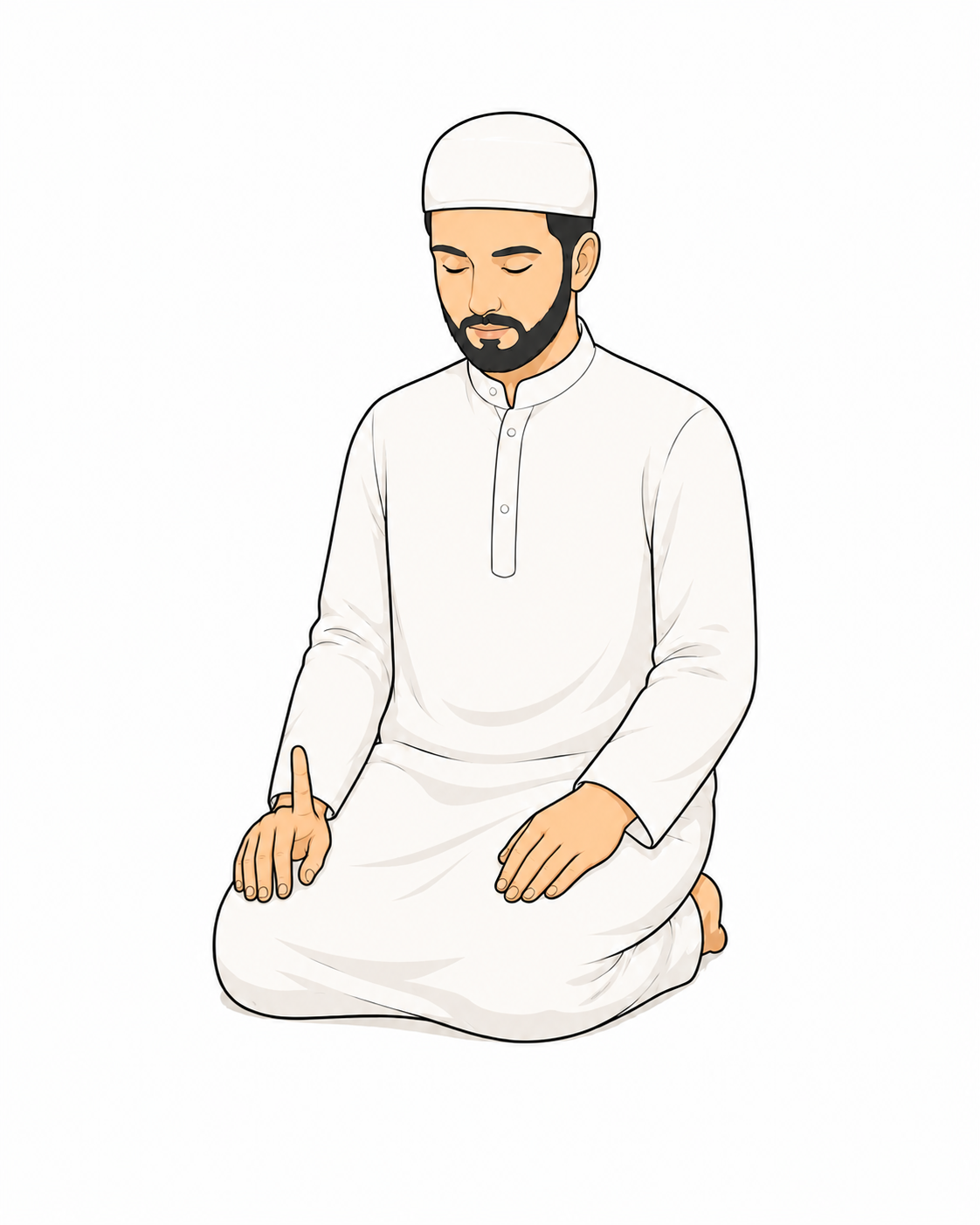
Sitting for Tashahhud
ٱلتَّشَهُّد
While coming up to the sitting position say "Allāhu akbar", sit on your left foot with the right foot upright. Rest your hands on your thighs and gently raise the right index finger at the mention of Allah — a quiet witness of His Oneness.
Said in this position:
08
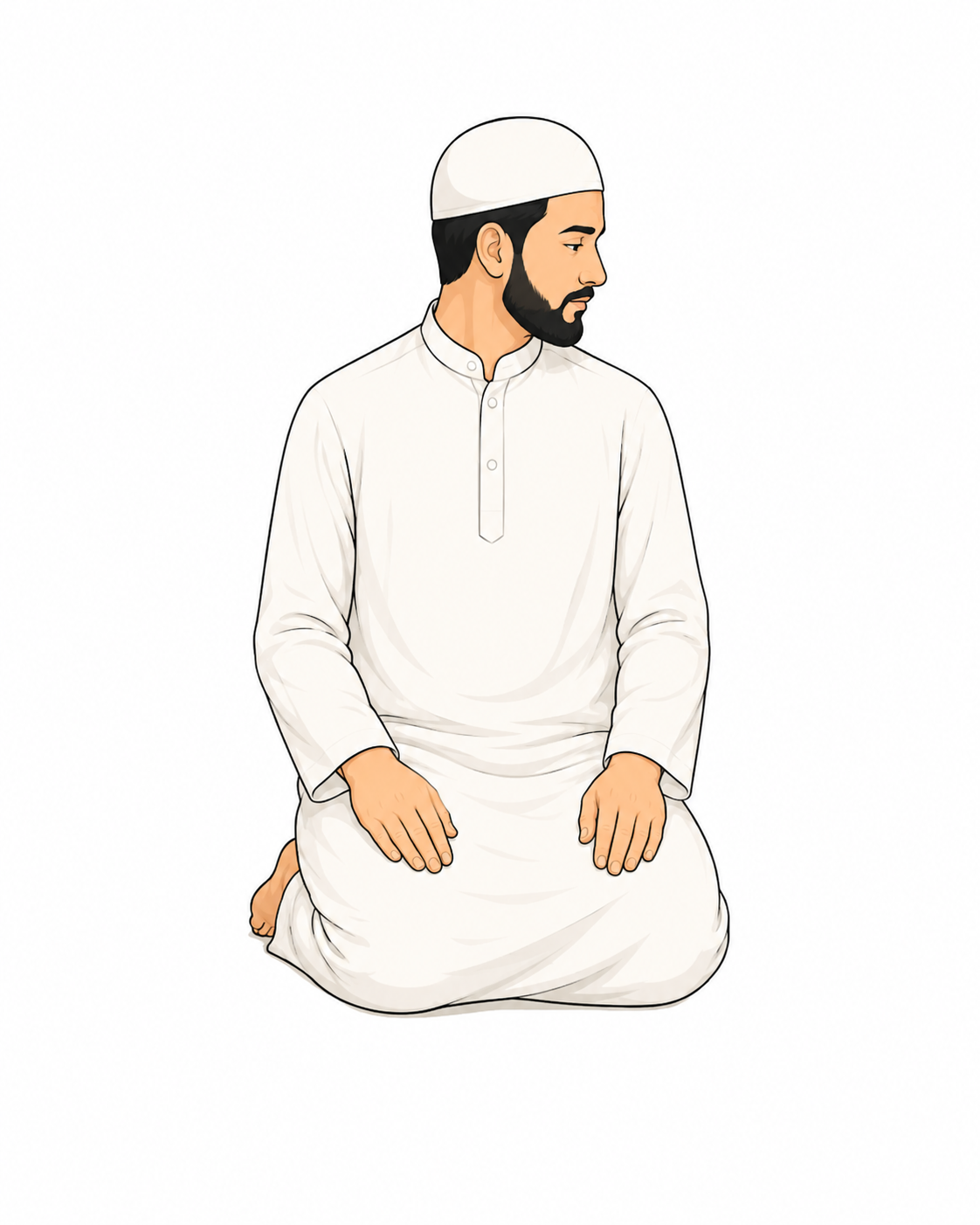
Taslīm to the right
ٱلتَّسْلِيم
Still seated, turn your head to the right shoulder and greet the angel of good deeds.
Said in this position: As-salāmu ʿalaykum wa raḥmatullāh — 'Peace be upon you, and the mercy of Allah.'
09
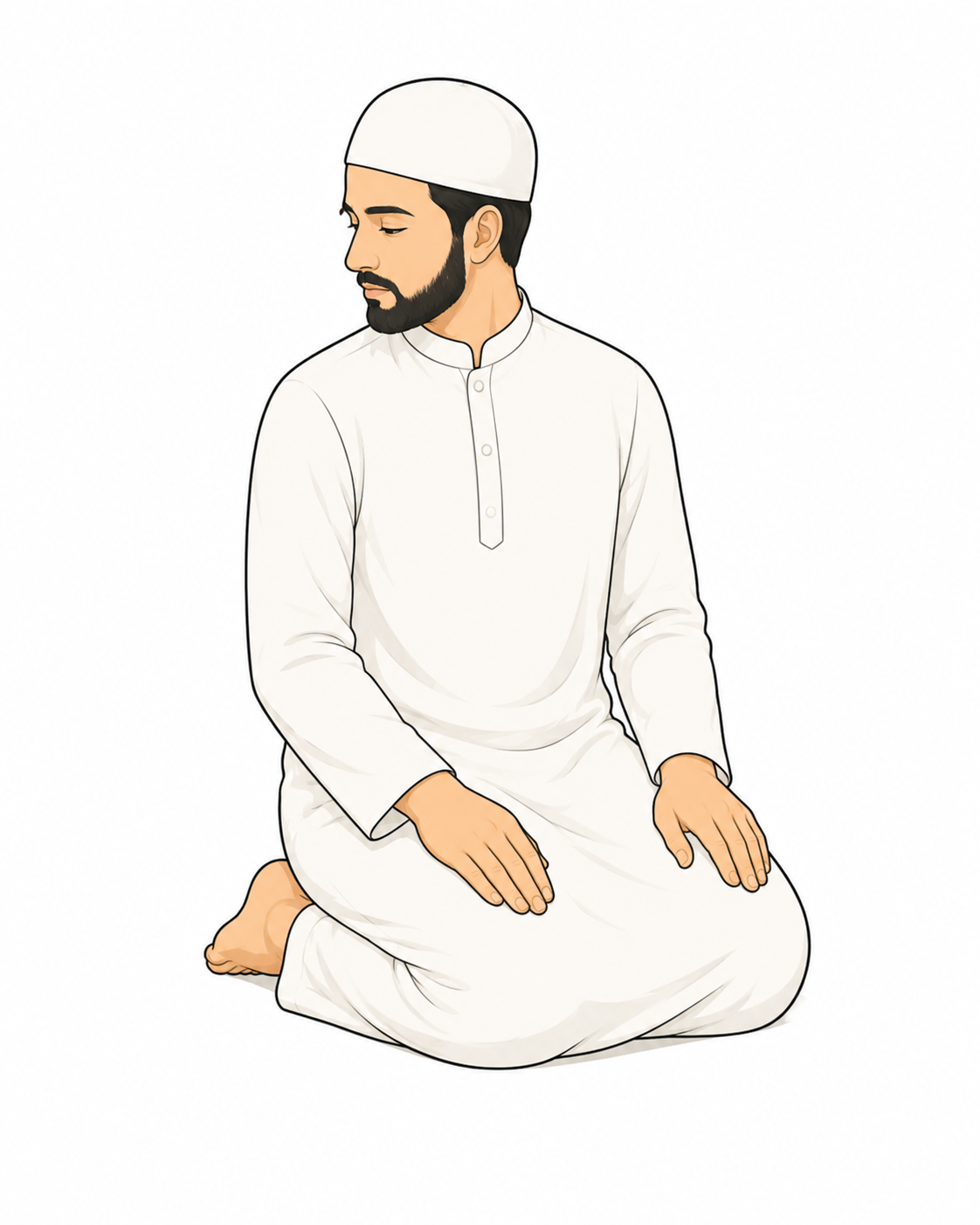
Taslīm to the left
ٱلتَّسْلِيم
Then turn your head to the left shoulder and repeat the greeting. With this, the prayer is complete.
Said in this position: As-salāmu ʿalaykum wa raḥmatullāh — and the prayer closes in peace.
A gentle note
For prayers of three or four rakʿahs
After the Tashahhud of the second rakʿah, do not give Taslīm. Instead, rise again for the third (and fourth) rakʿah, reciting only Surah Al-Fātihah — silently — before bowing. The final Tashahhud and the two Taslīms come at the very end.
وَأَقِمِ ٱلصَّلَاةَ لِذِكْرِي
"And establish prayer for My remembrance."
Surah Ṭāhā · 20:14
Next: the Book you'll recite in prayer.
Every prayer opens with Surah Al-Fātihah — the first surah of the Qur'an.